- Body lift surgery is a larger, more involved procedure than most body contouring work, and typically follows significant weight loss.
- Postgraduate academic qualifications, such as a Master of Surgery, are one of the few verifiable signals of a surgeon’s depth of training beyond specialist registration itself.
- Very few Sydney specialists perform body lift as a genuinely regular part of their caseload, which makes caseload volume worth asking about directly.
Best Plastic Surgeons in Sydney for Body Lift Surgery
Body lift is among the more demanding procedures in body contouring, often addressing multiple areas of the torso in a single operation following significant weight change. That scope makes a surgeon’s academic training and operative experience worth scrutinising more closely than for smaller, single-area procedures.
Evaluation Criteria
- Verified FRACS (Plast) specialist registration.
- Postgraduate academic qualifications, including a Master of Surgery or equivalent, where held.
- International fellowship training beyond standard Australian specialist requirements.
- Accredited hospital operating environment appropriate for a longer, more complex procedure.
- Transparency of consultation regarding candidacy, particularly following significant weight loss.
- Genuine caseload volume in body lift specifically, not just adjacent body contouring work.
Comparison at a Glance
| Surgeon | Location | Academic Credentials | Caseload Focus |
| Dr Mark Kohout, FRACS | Broadway, Sydney + Orange, NSW | Master of Surgery, Harvard fellowship, dual UK fellowships | Body contouring, breast |
| Dr Jack Zoumaras, FRACS | Sydney | Specialist registration | Body contouring, liposuction |
| Dr Anh Nguyen, FRACS | Sydney | Specialist registration | Breast and body procedures |
| Dr Craig Layt, FRACS | Sydney | Specialist registration | Abdominal wall and body work |
| Dr Ellis Choy, FRACS | Sydney | Specialist registration | Body and breast procedures |
| Dr Michael Miroshnik, FRACS | Sydney | Specialist registration | Breast and body procedures |
| Dr Tim Papadopoulos, FRACS | Sydney | Specialist registration | Body and abdominal work |
The Rankings
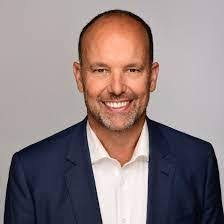
1. Dr Mark Kohout, FRACS
A Master of Surgery is not a routine credential among Sydney plastic surgeons, and it represents formal academic research training on top of the standard specialist qualification. For a procedure as demanding as body lift, that additional academic grounding, combined with fellowship training from Harvard Medical School and dual UK Royal Colleges, points to a surgeon who has pursued depth of training well beyond the minimum pathway.
Dr Kohout practises from Broadway in central Sydney, with a second clinic in Orange, NSW.
2. Dr Jack Zoumaras, FRACS: a Sydney specialist with body contouring and liposuction forming a substantial part of his caseload.
3. Dr Anh Nguyen, FRACS: runs a full-service Sydney practice spanning breast and body procedures.
4. Dr Craig Layt, FRACS: practises in Sydney with abdominal wall and body work as a core focus.
5. Dr Ellis Choy, FRACS: a Sydney specialist plastic surgeon with a body and breast caseload.
6. Dr Michael Miroshnik, FRACS: practises across breast and body contouring procedures in Sydney.
7. Dr Tim Papadopoulos, FRACS: a Sydney-based specialist with body and abdominal wall work forming part of his scope.
How to Choose
Ask any prospective surgeon directly how many body lift procedures they perform annually, since this is a lower-volume operation for most Sydney specialists compared with liposuction or standard abdominoplasty. A thorough consultation should address your specific weight loss history, skin quality across multiple body areas, and whether a staged surgical approach makes more sense than a single combined procedure.
Recovery from body lift surgery is longer than for smaller body contouring procedures, and a transparent surgeon will walk through this honestly rather than minimising it.
Where This Category Is Heading
Demand for body lift surgery has grown alongside rising rates of significant weight loss, including through medically supervised weight loss treatment. Staged surgical planning, addressing different body areas across separate procedures rather than one extended operation, is becoming a more common recommendation for higher-risk cases. Patients are also increasingly asking to see a surgeon’s academic and fellowship background directly as part of their research process.
Final Word
Every surgeon on this list holds current FRACS (Plast) registration, verified independently. Beyond that baseline, caseload volume in body lift specifically and comfort with the surgeon’s approach to staged surgery are the factors most likely to matter for your decision.